Eleven CSCEC projects with original designs were on display at the China Pavilion at the UIA World Congress of Architects 2026 in Barcelona, Spain. The pavilion showcased more than 350 representative projects, with CSCEC's projects spanning seven categories: urban regeneration, landscape design & architecture, public architecture, art and culture, quality education, health and well-being, and cutting-edge innovation.
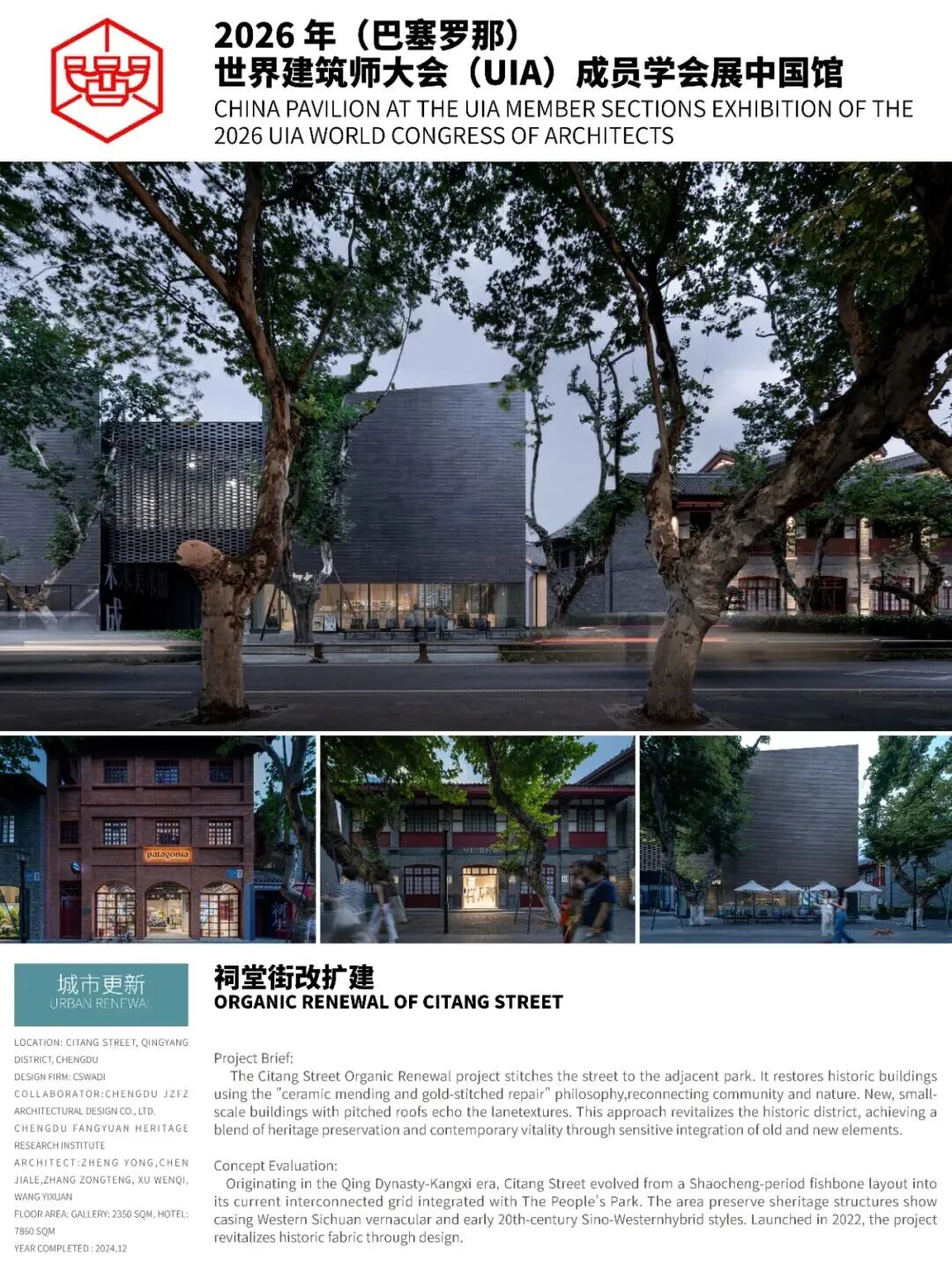
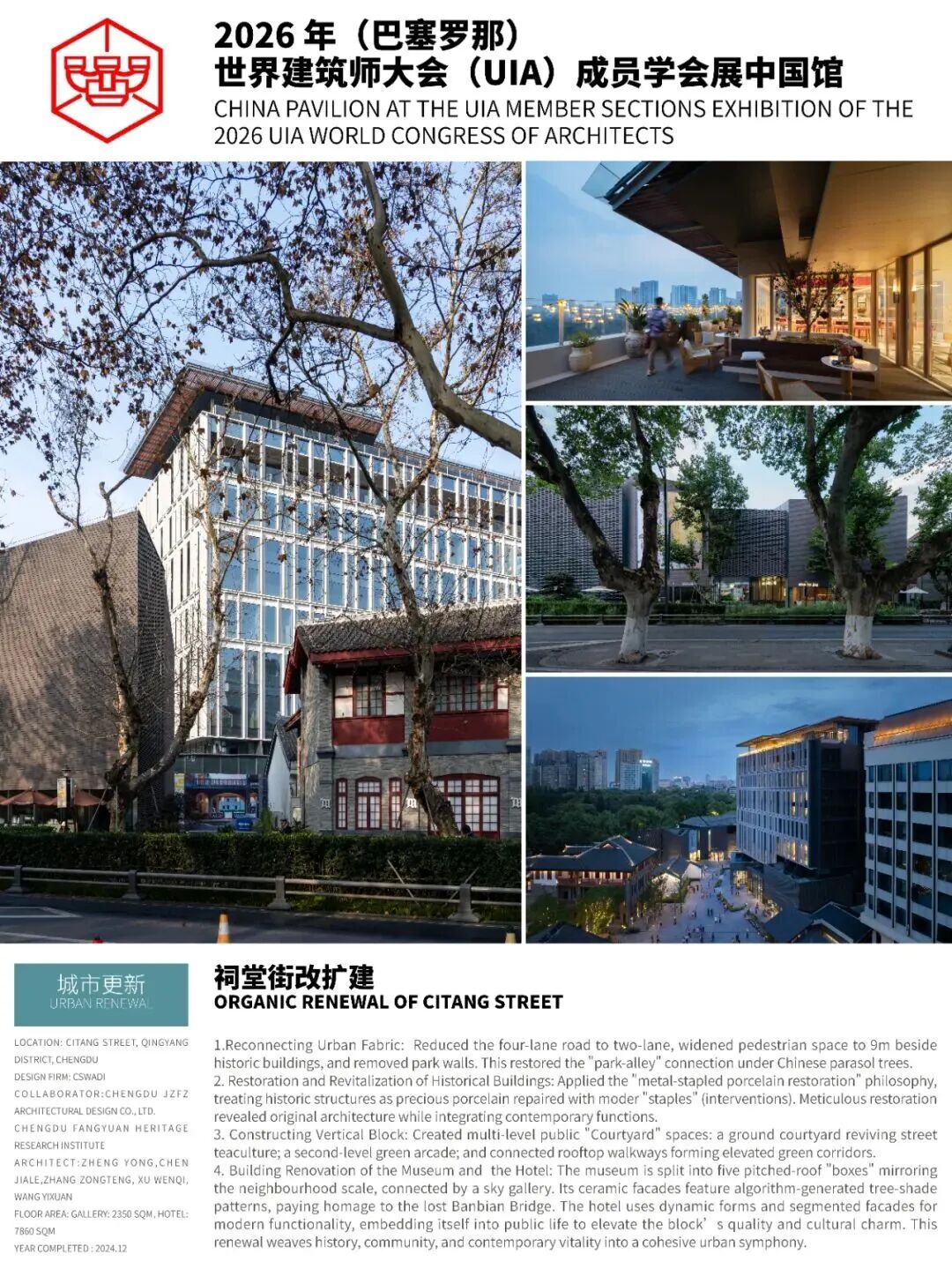
Organic Renewal of Citang Street
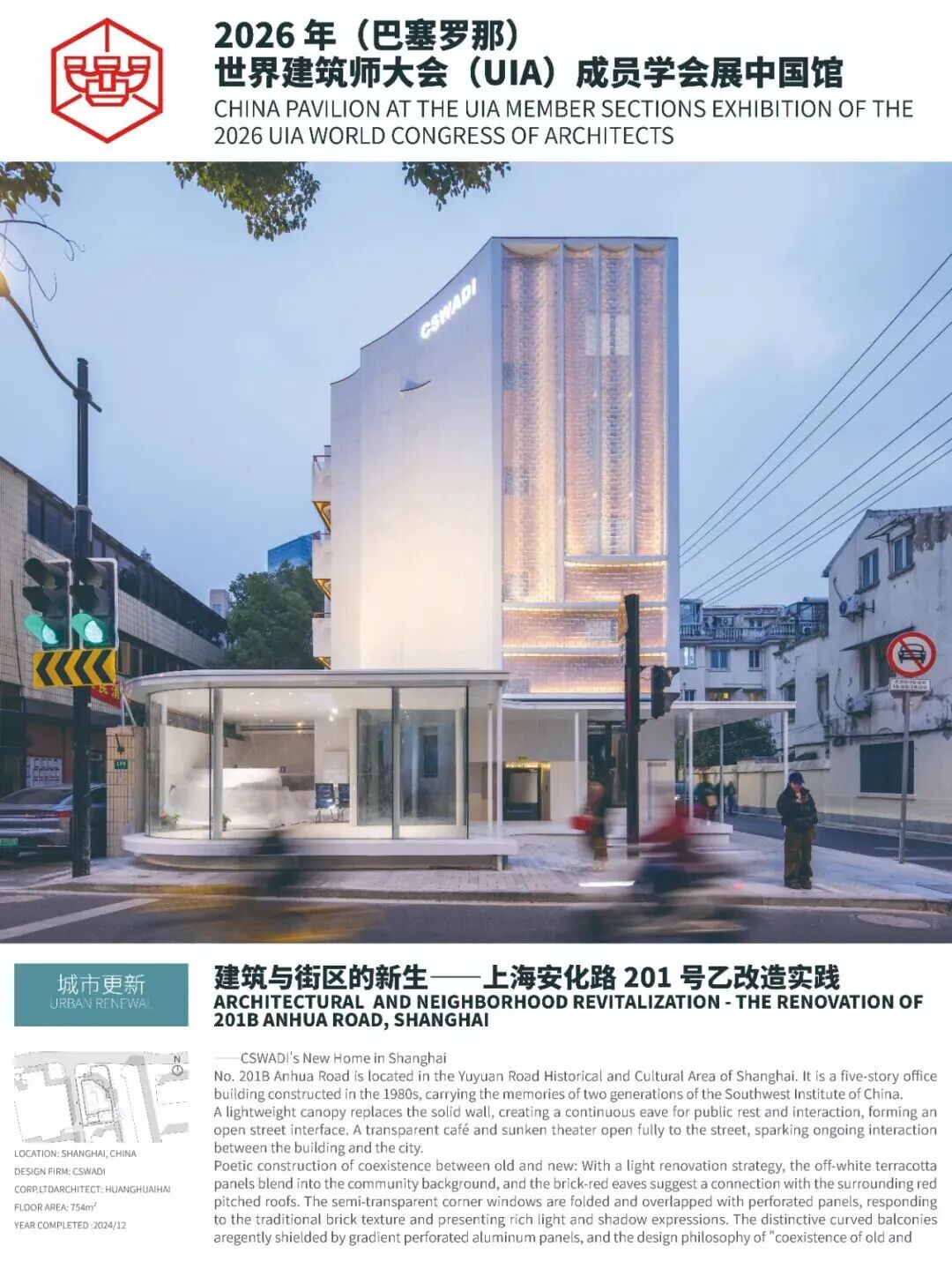
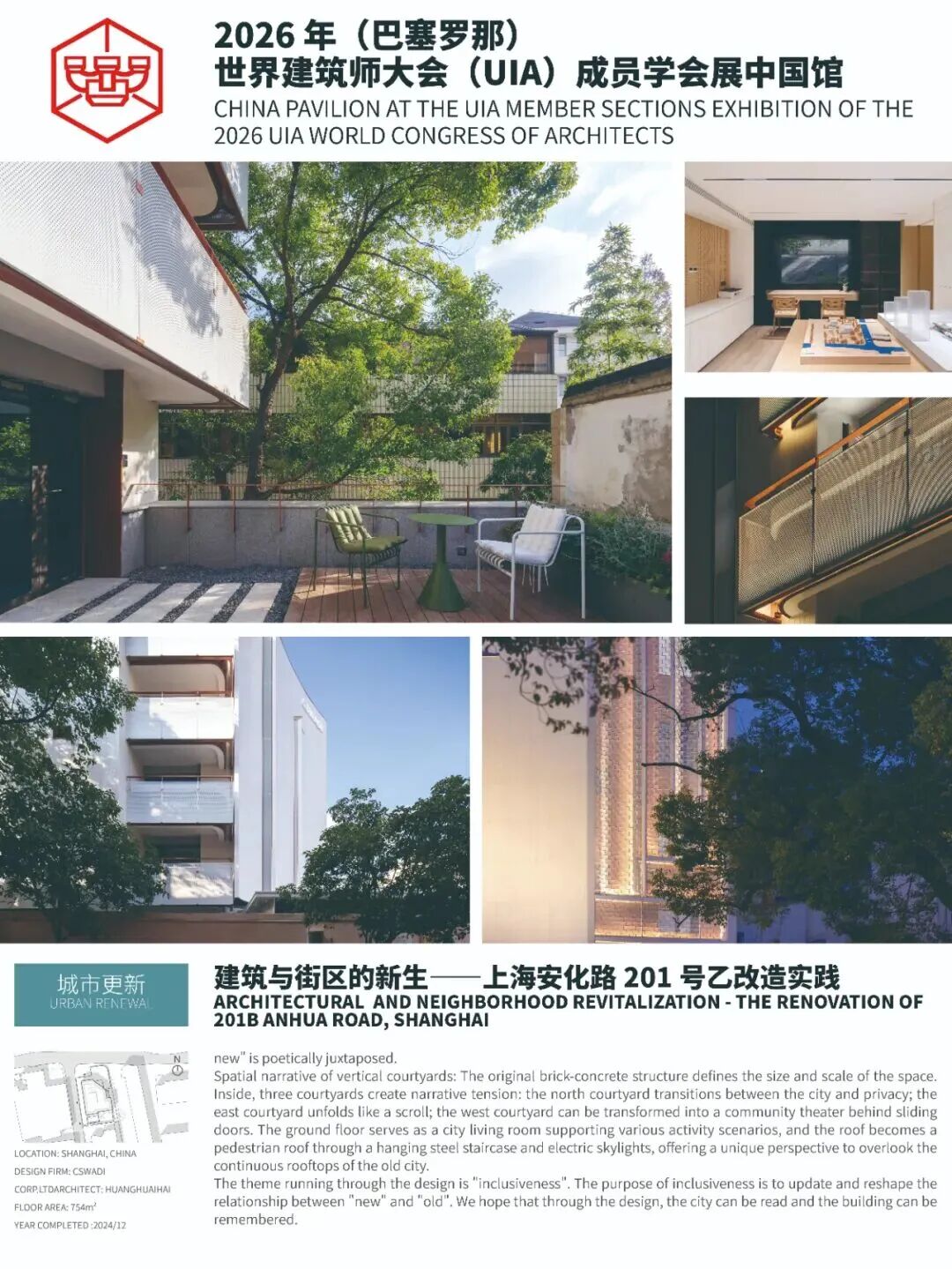
The Renovation of 201B Anhua Road, Shanghai
The category of urban regeneration focuses on rediscovering and reorganizing existing space. Through preservation, adaptive reuse, and improvements to public spaces, the projects weave historic districts, industrial heritage, and old communities back into contemporary life, keeping local memory and community vitality alive.
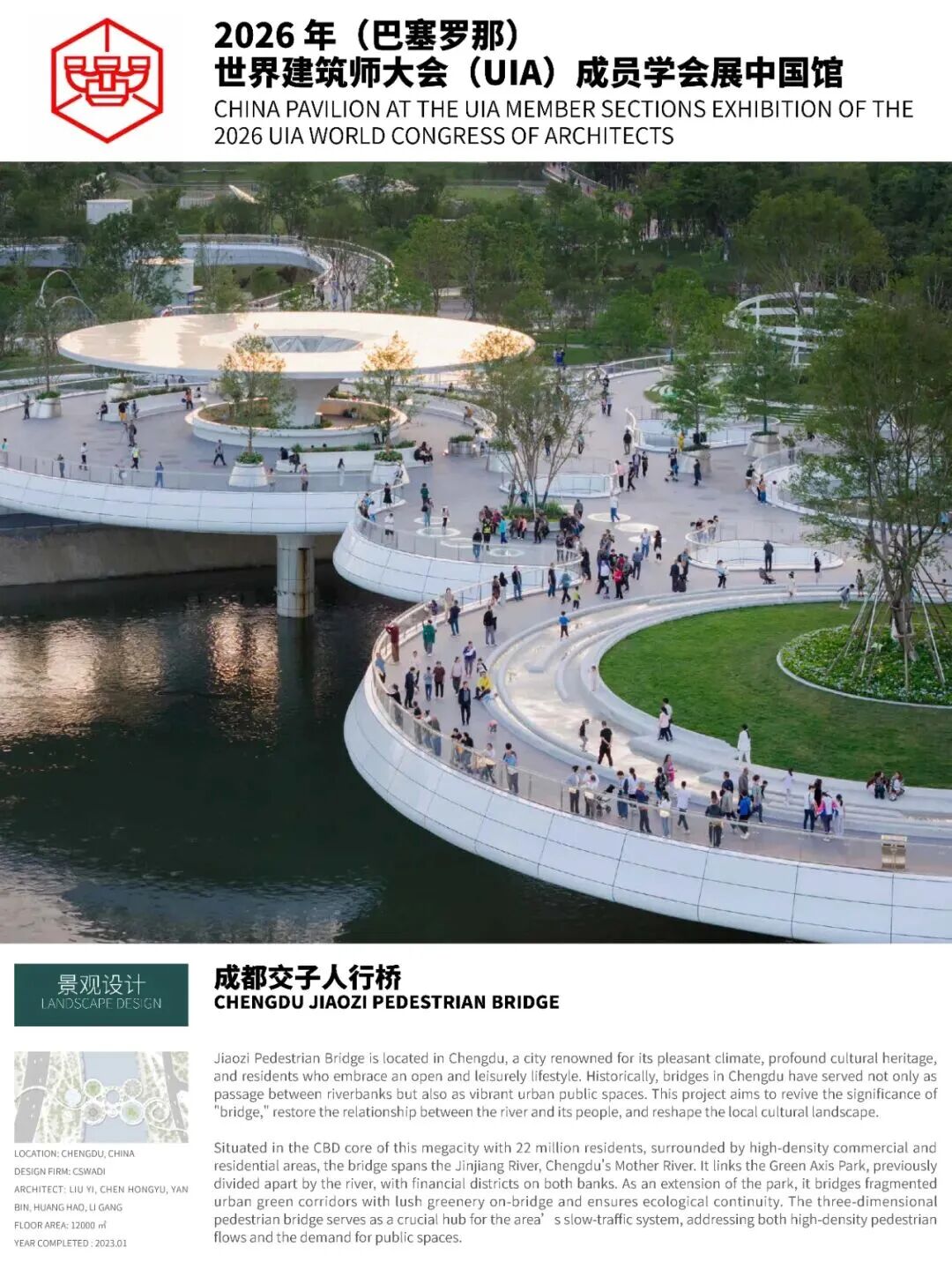
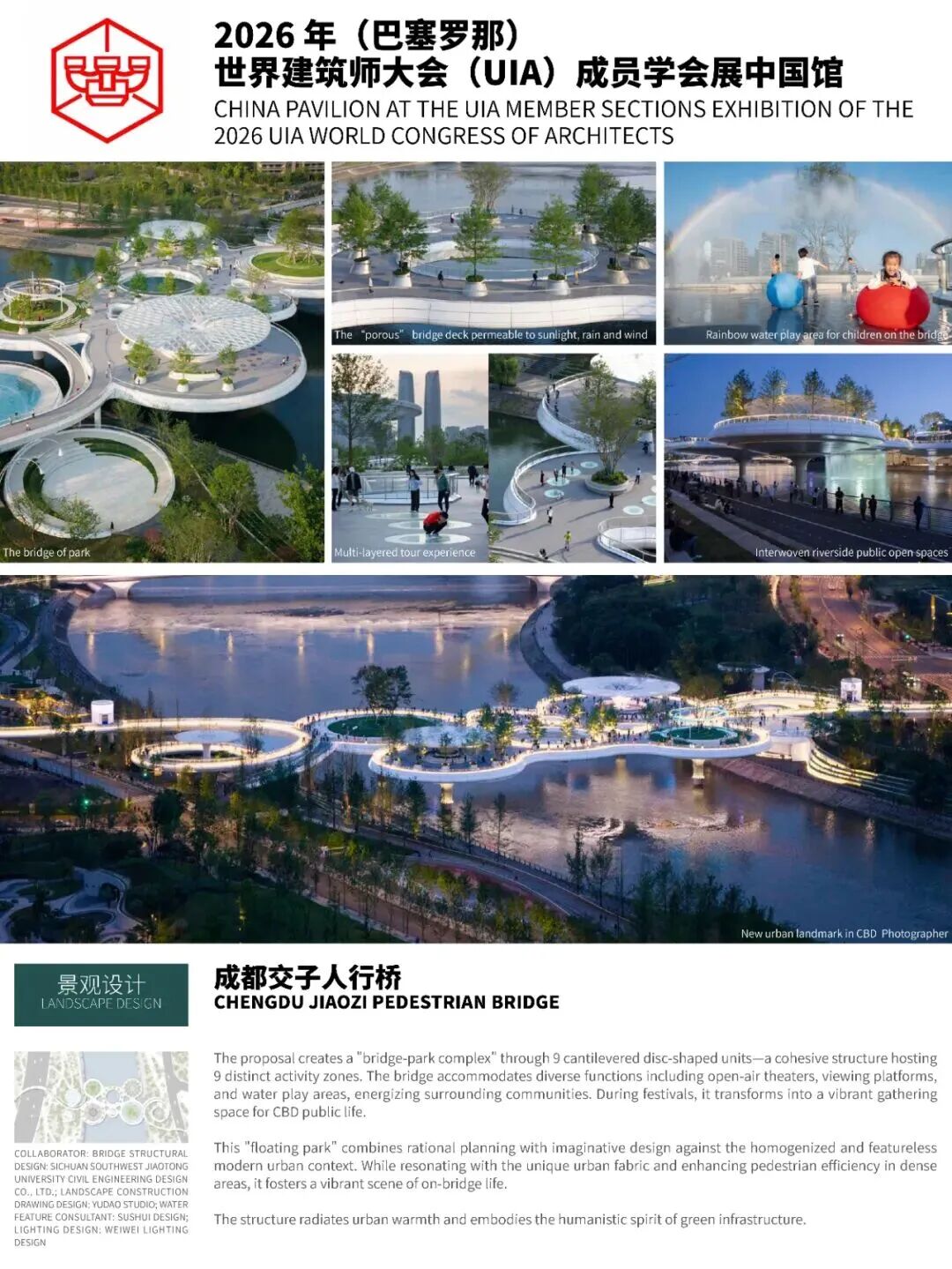
Chengdu Jiaozi Pedestrian Bridge
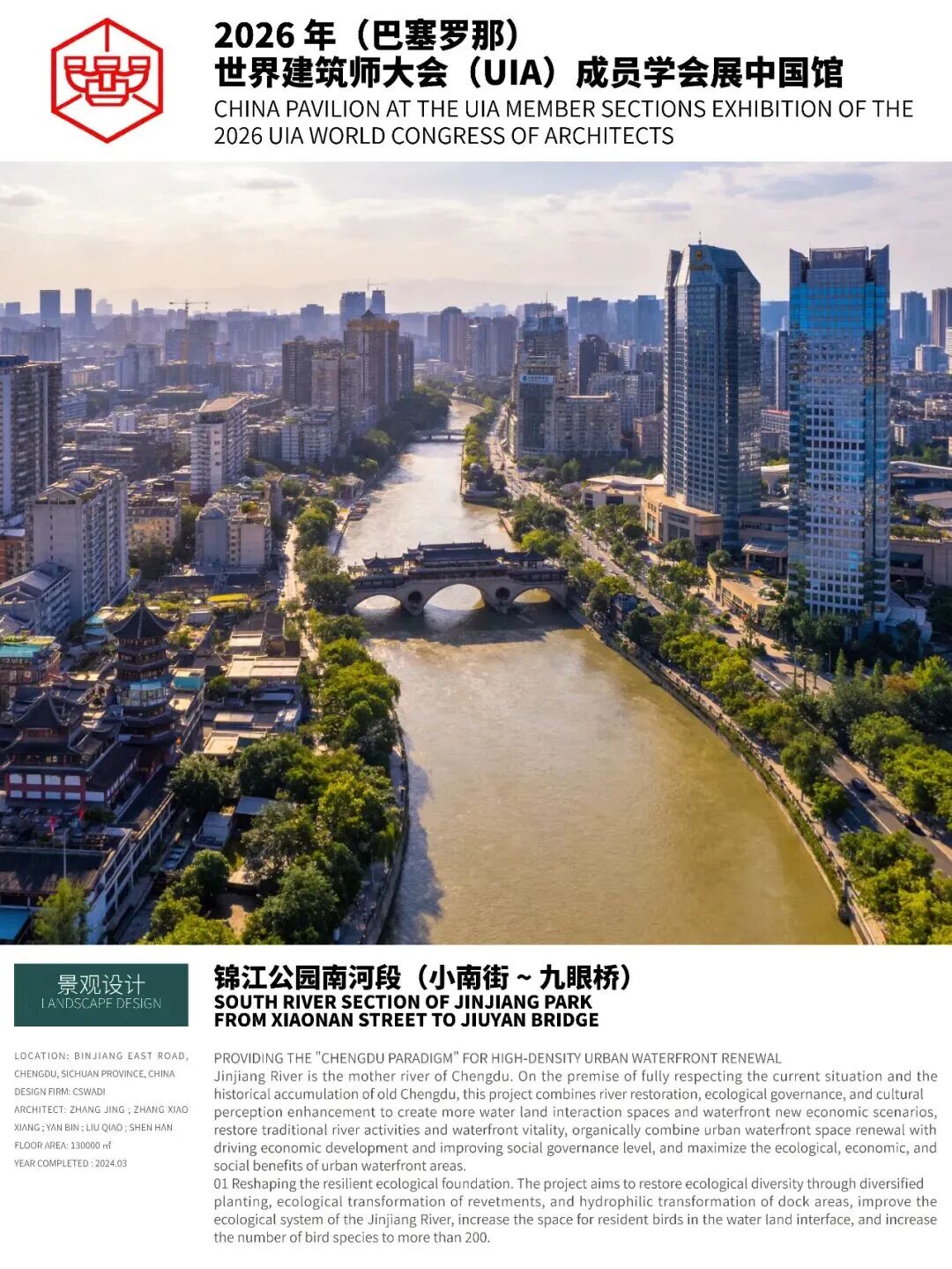
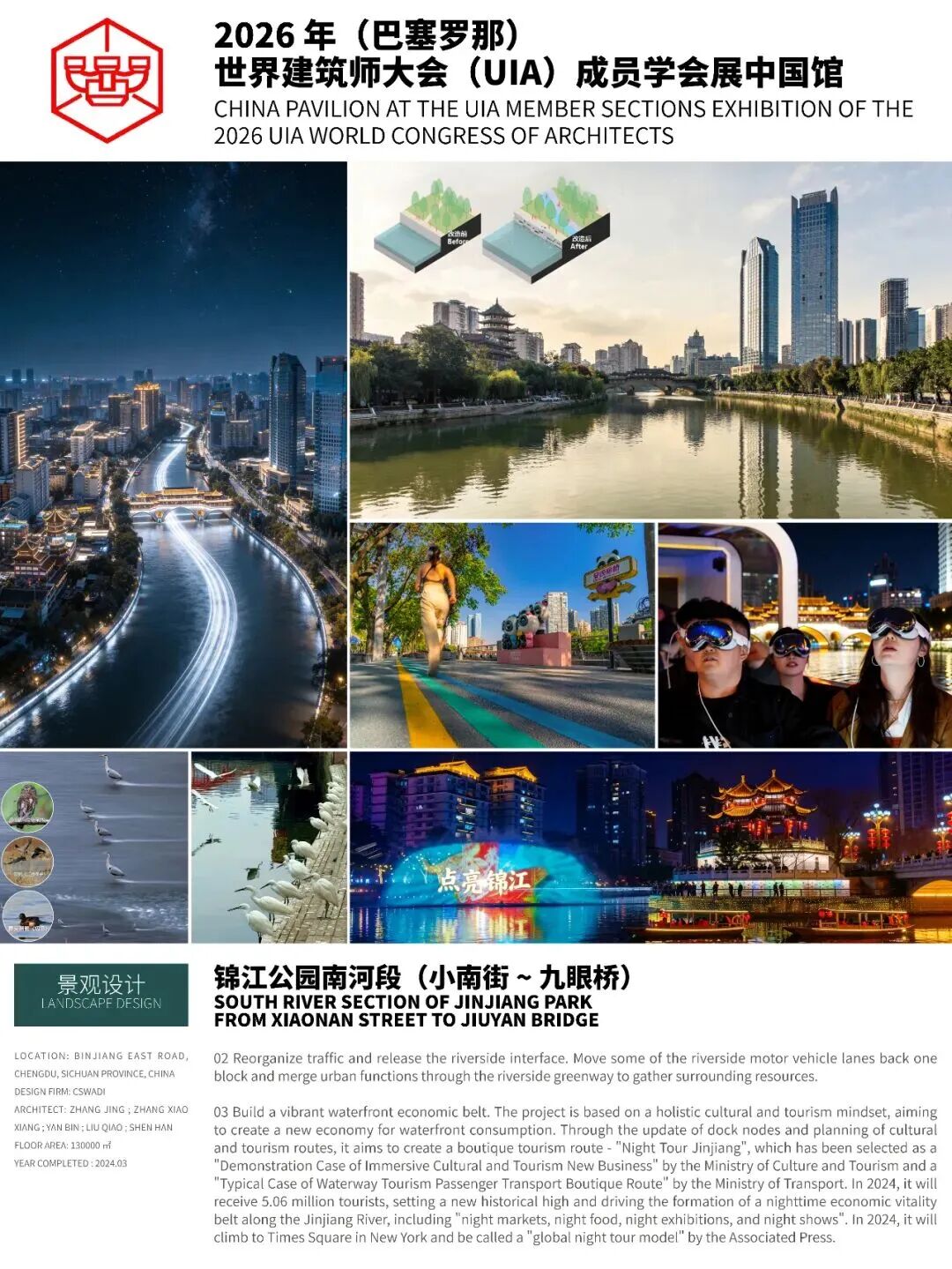
South River Section of Jinjiang Park
From Xiaonan Street to Jiuyan Bridge
The category of landscape design & architecture explores a more flexible relationship among architecture, the city, and nature. The projects cover parks, waterfronts, ecological restoration, and infrastructure upgrades. With low-impact intervention and open public spaces, the projects ensure that landscape connects the ecology with daily urban life.
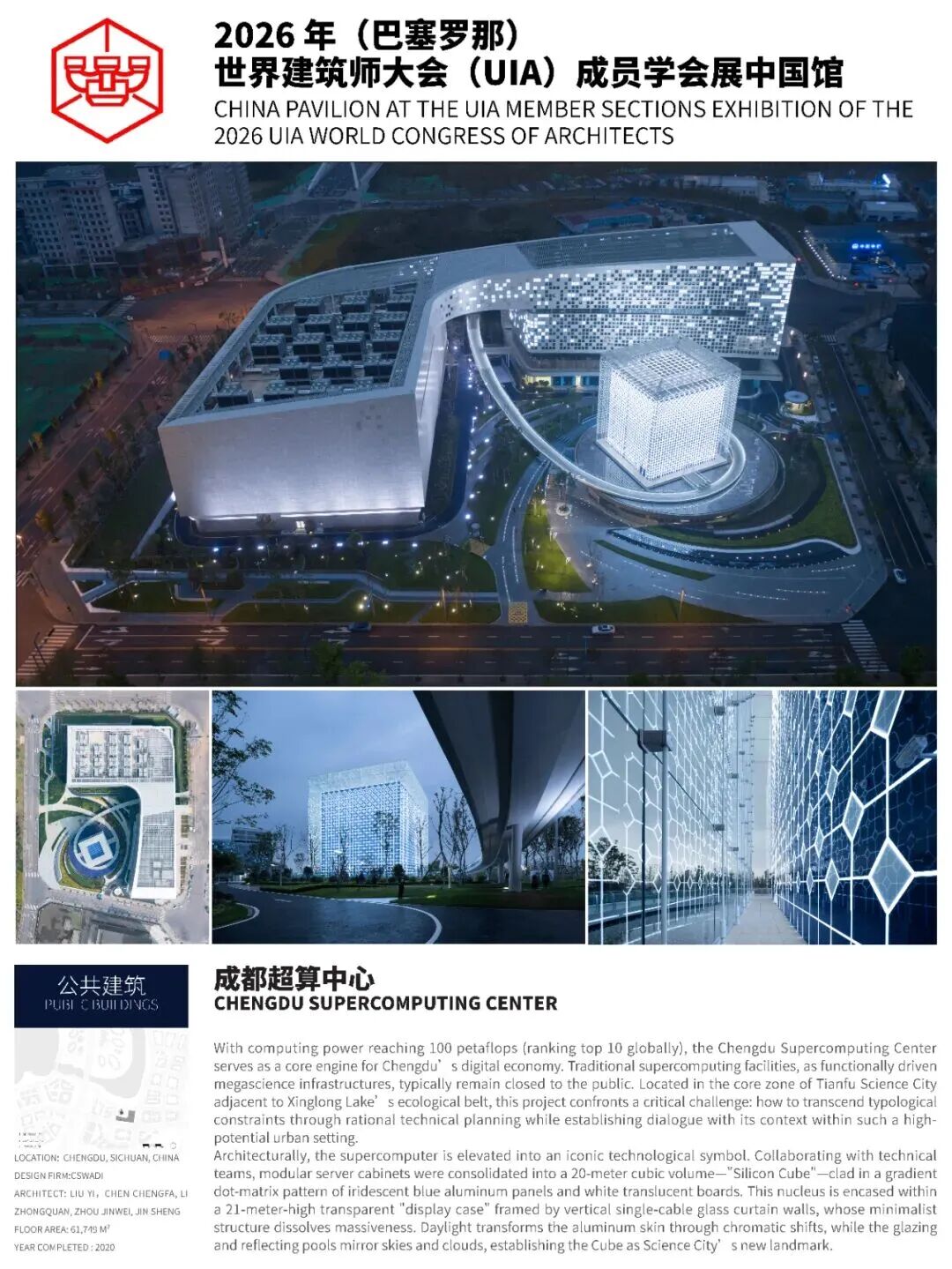
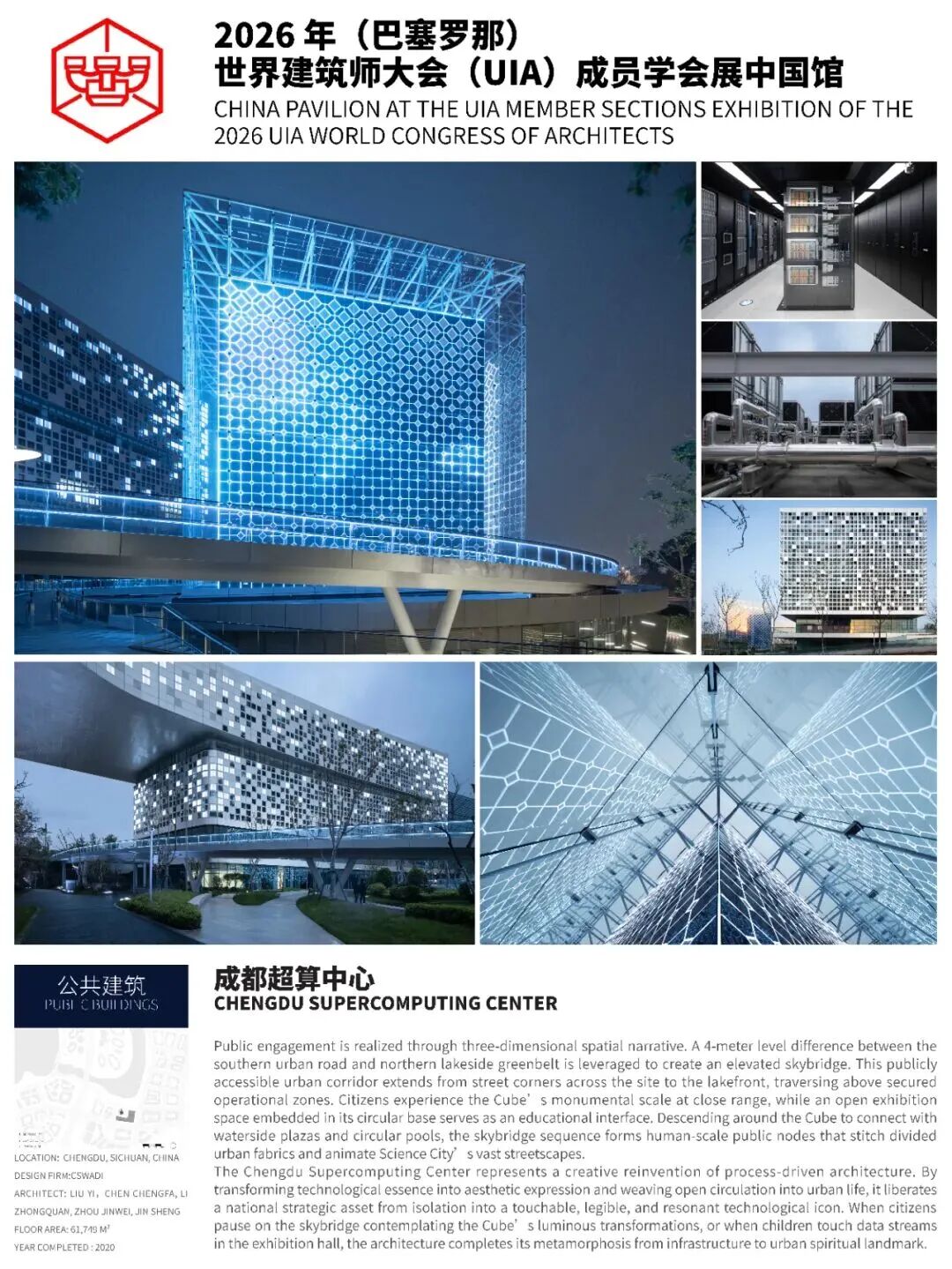
Chengdu Supercomputing Center
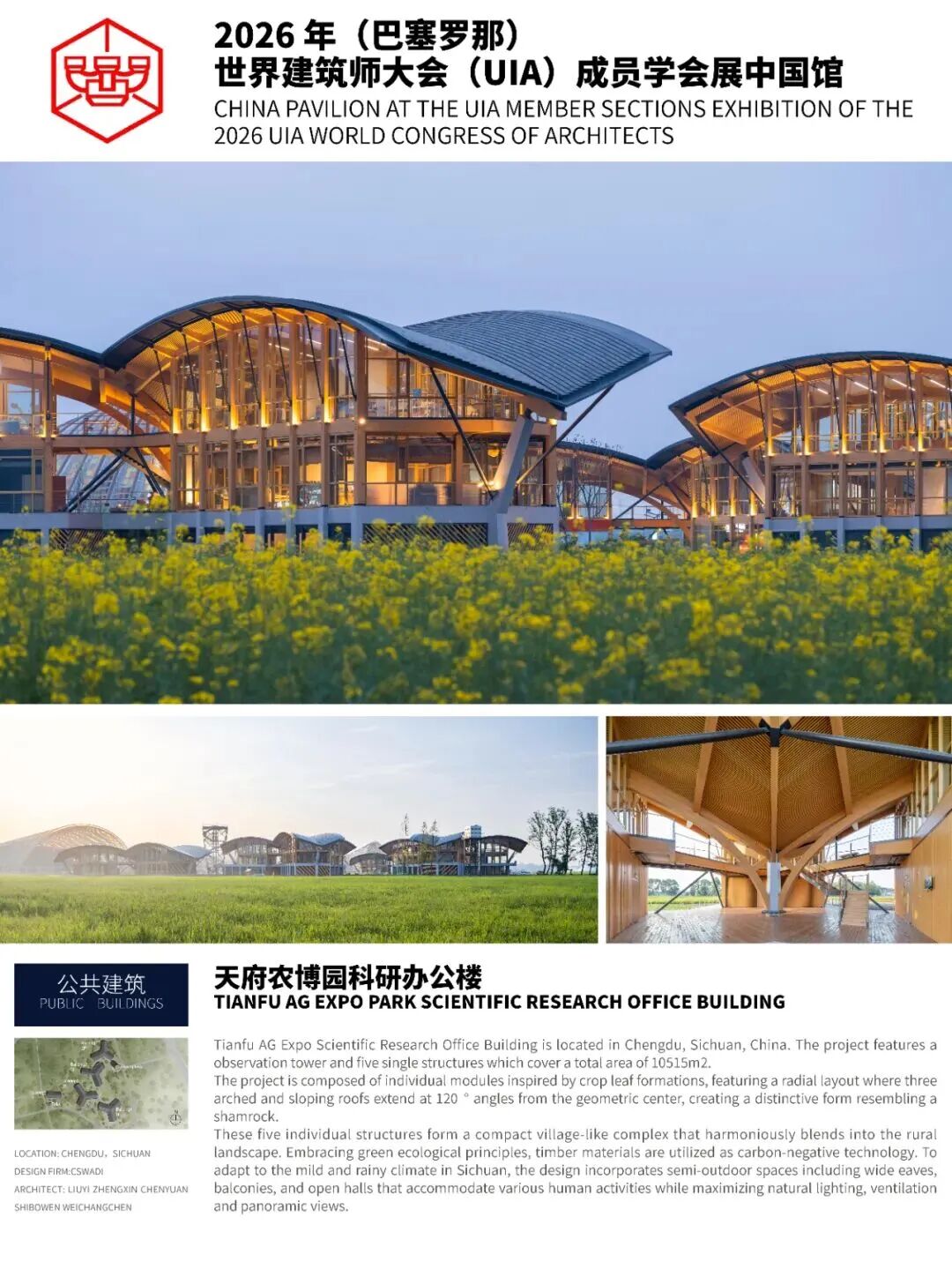
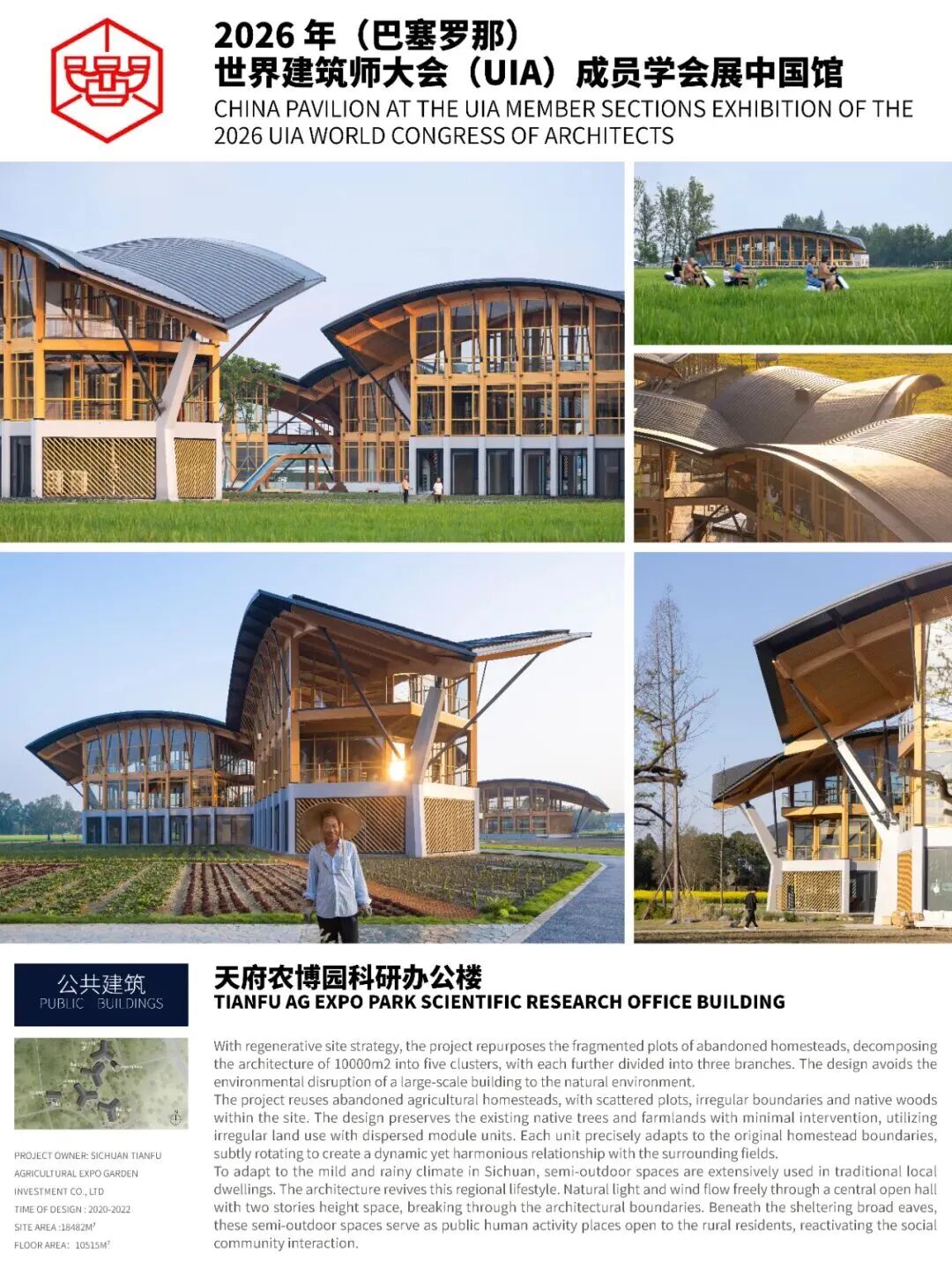
Tianfu Ag Expo Park Scientific Research Office Building
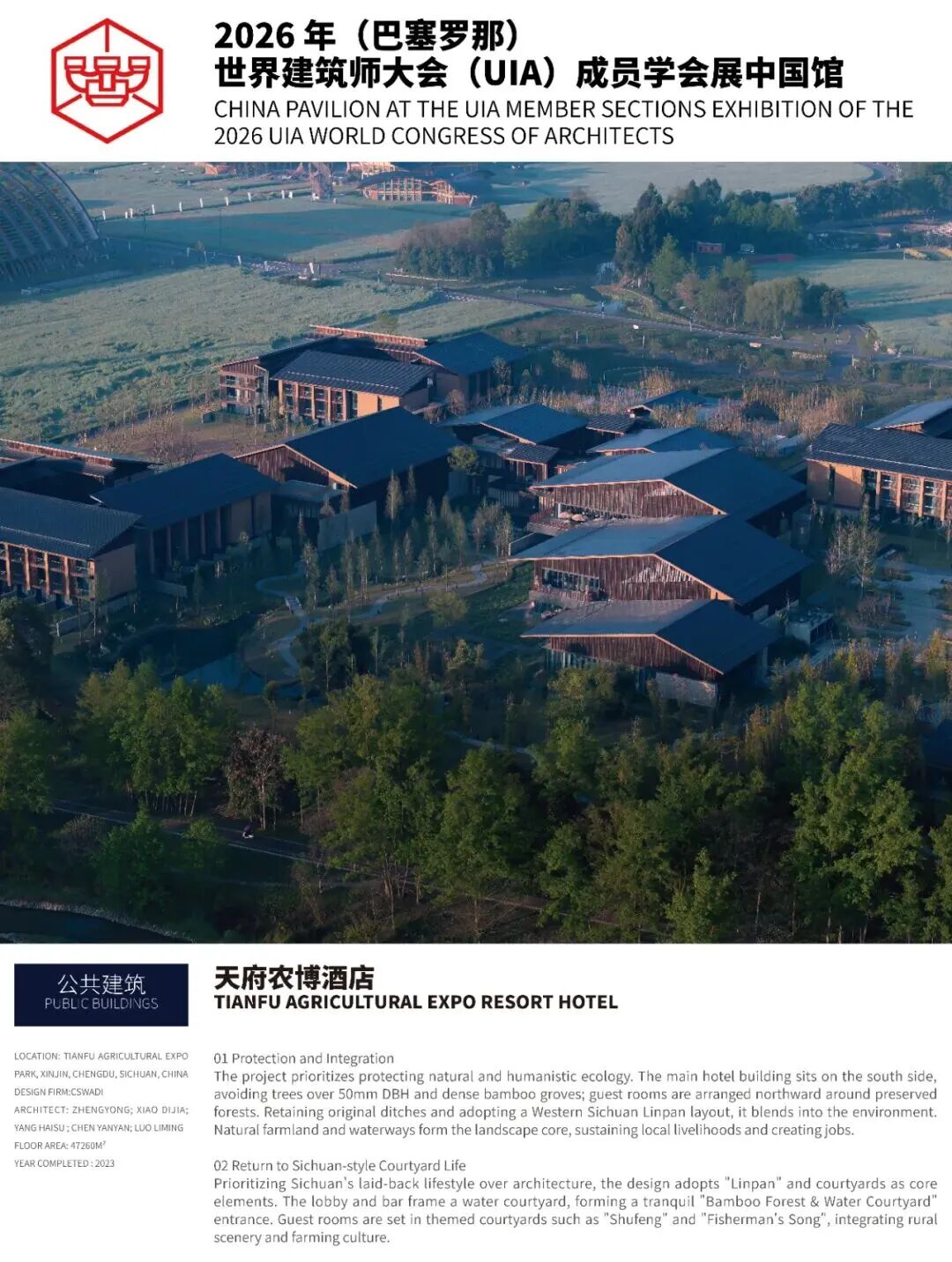
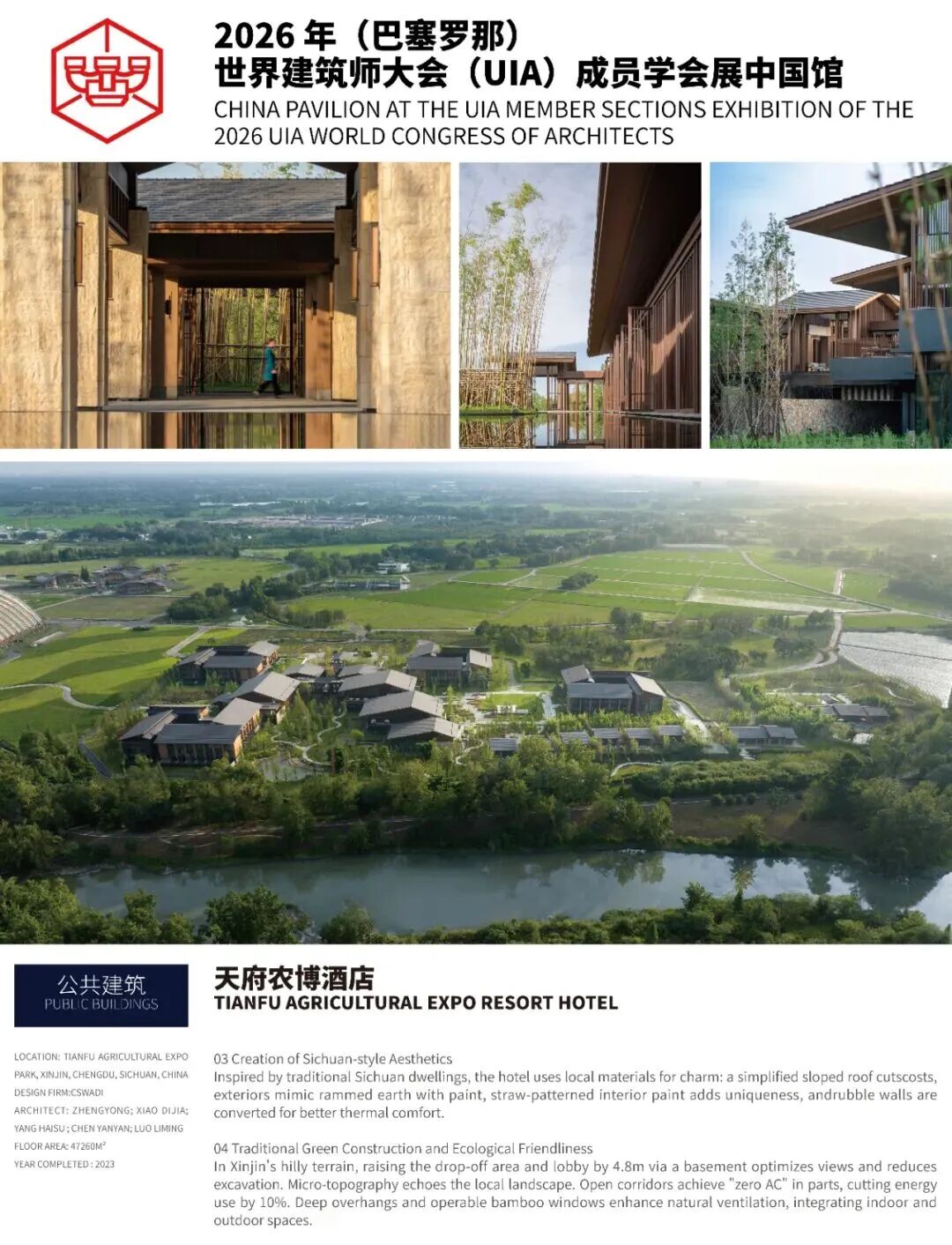
Tianfu Agricultural Expo Resort Hotel
The category of public architecture reflects a shift in contemporary public architecture from landmark statements toward public service. The projects include cultural, sports, transportation, and service and comprehensive facilities designed to be open, inclusive, and easy to access, turning buildings into places where urban life, social connection, and civic spirit converge.
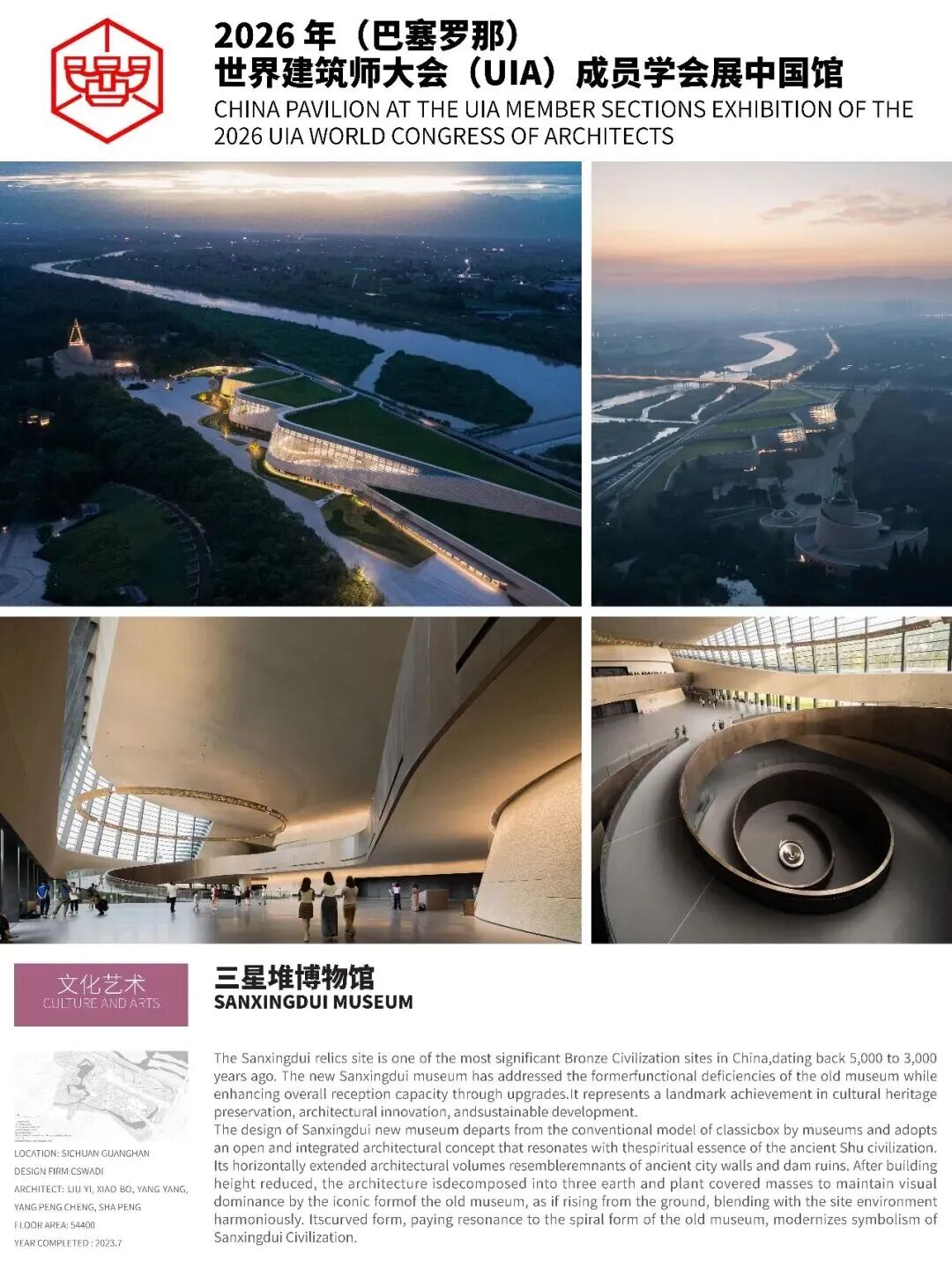
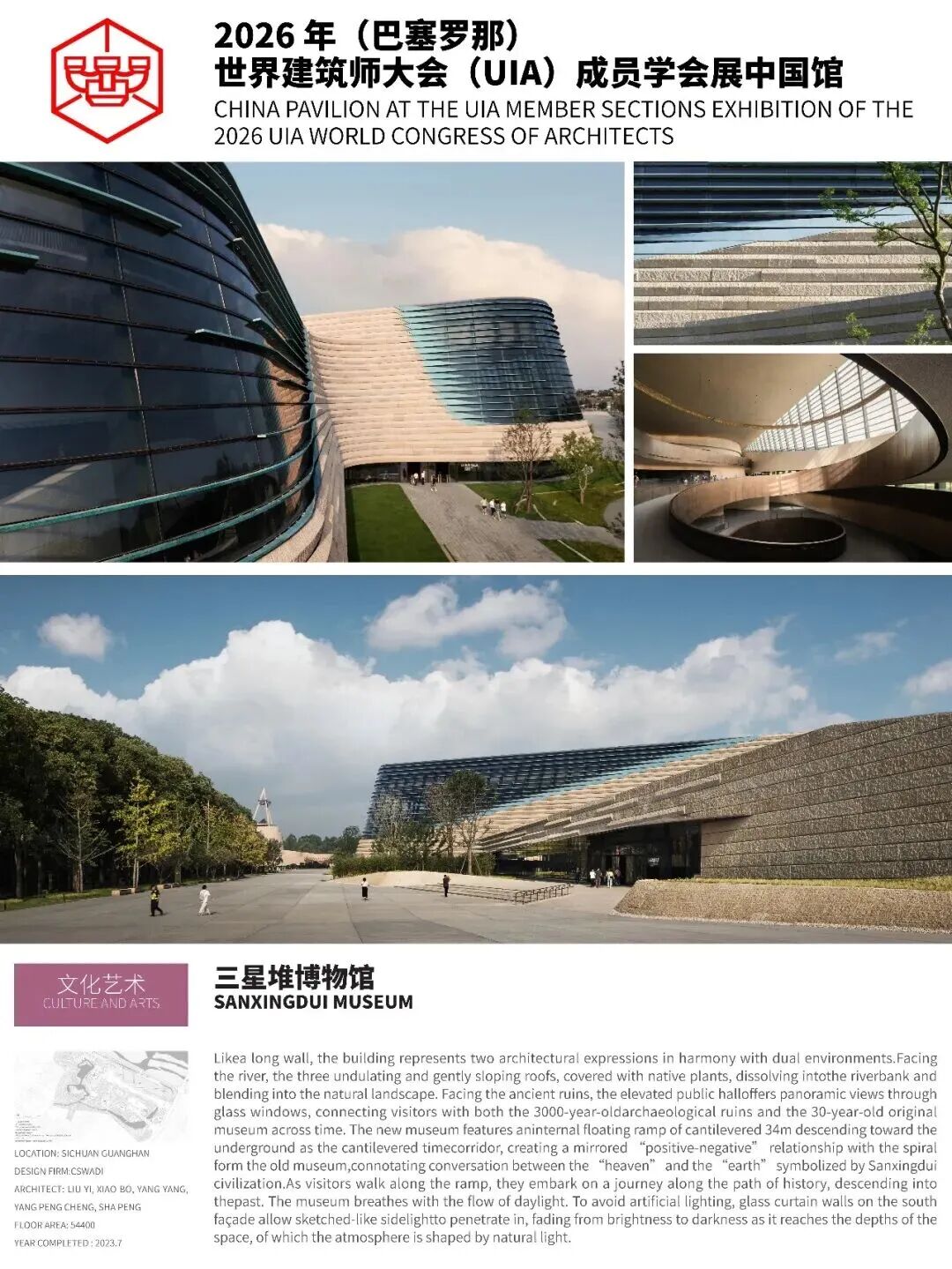
Sanxingdui Museum
The category of art and culture focuses on how architecture reflects memory, perception, and cultural context. The projects include museums, galleries, libraries, cultural centers, and updated historic spaces, using light, materials, structure, and spatial storytelling to turn local cultural and artistic experiences into an experience people can feel.
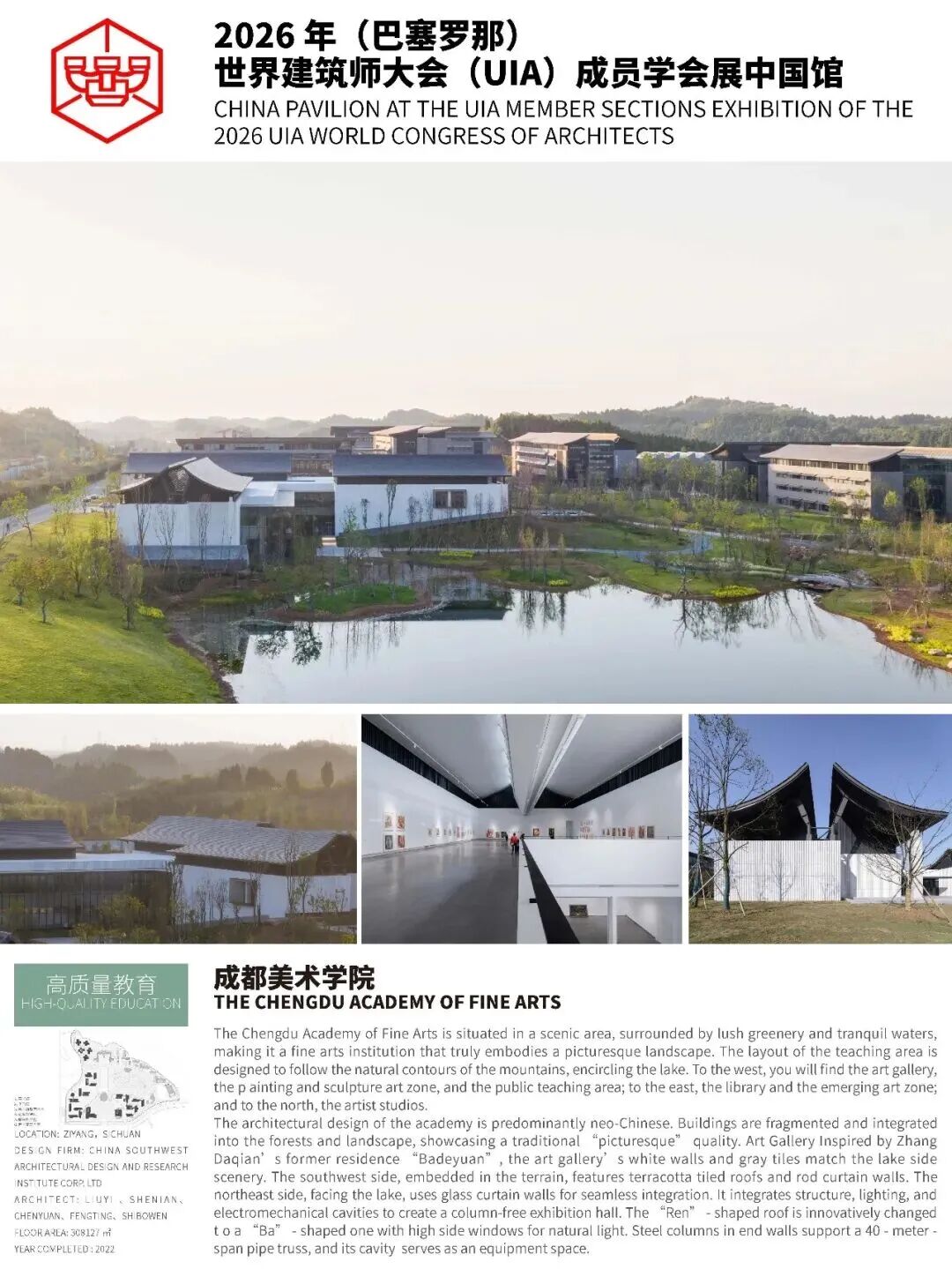
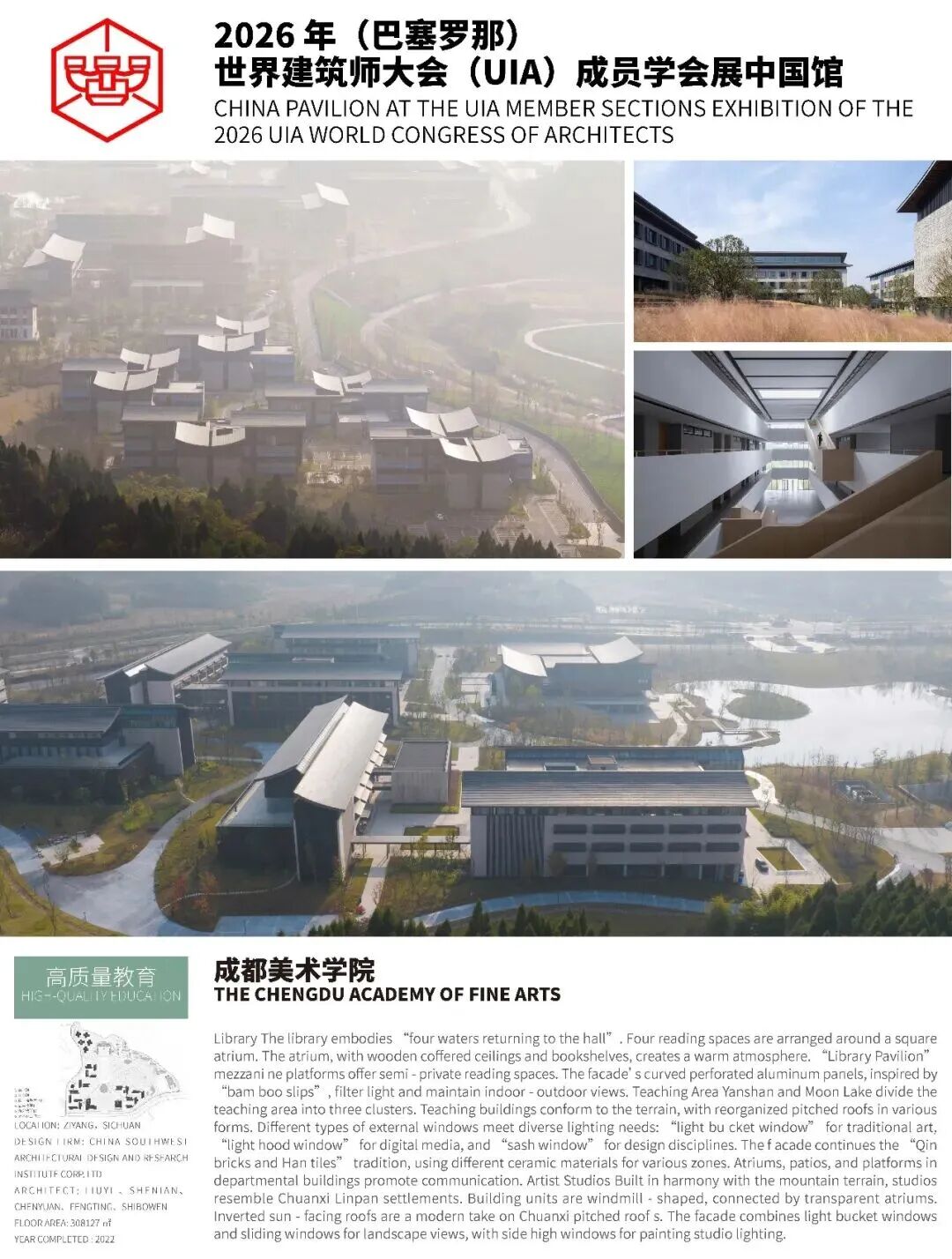
The Chengdu Academy of Fine Arts
The category of quality education shows how changing ideas about education are reshaping campus design. Spanning both basic and higher education, the projects emphasize open, shared, low-carbon spaces built around learners, turning campuses into places for exchange, exploration, exercise, and growth.
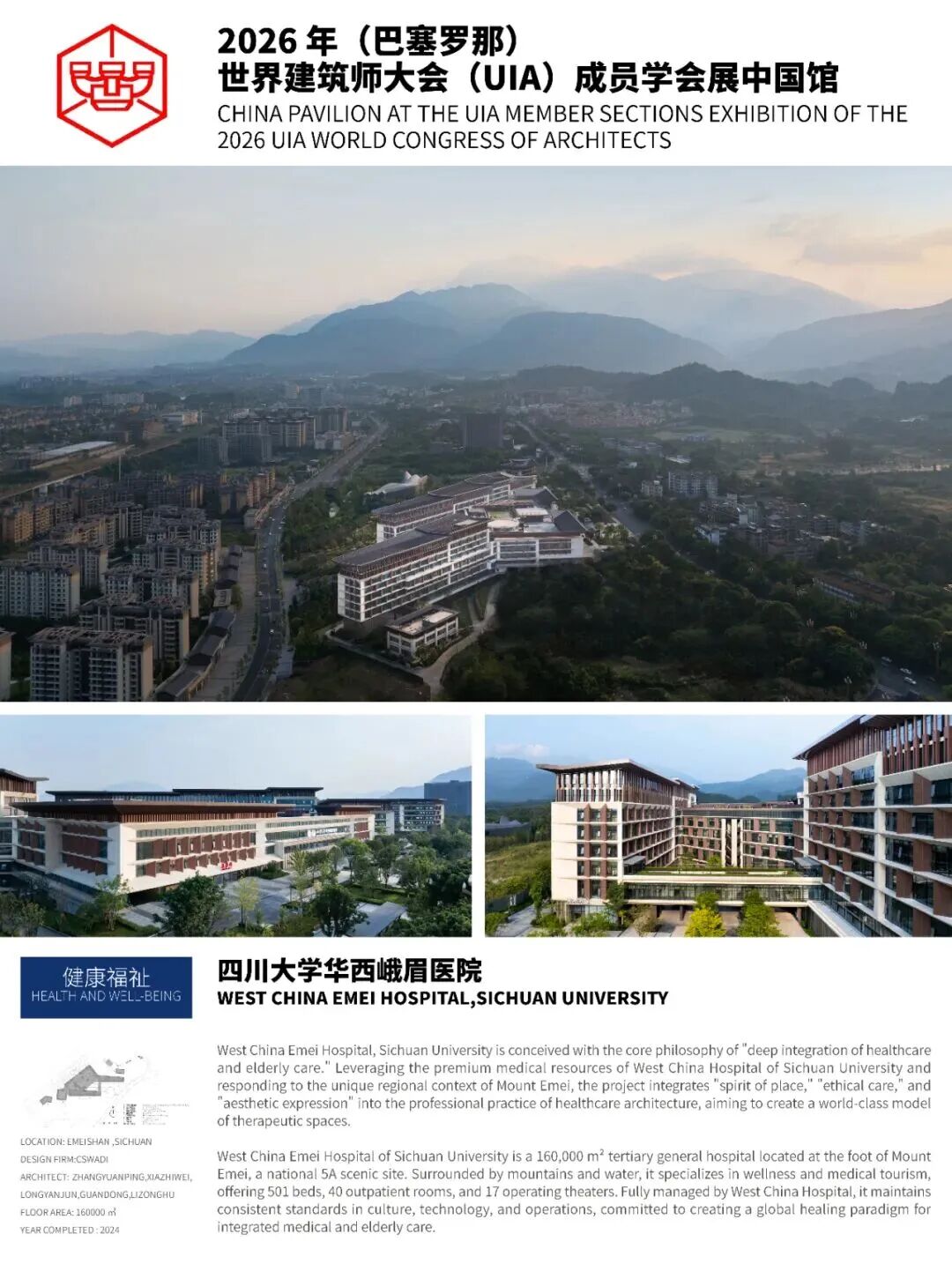
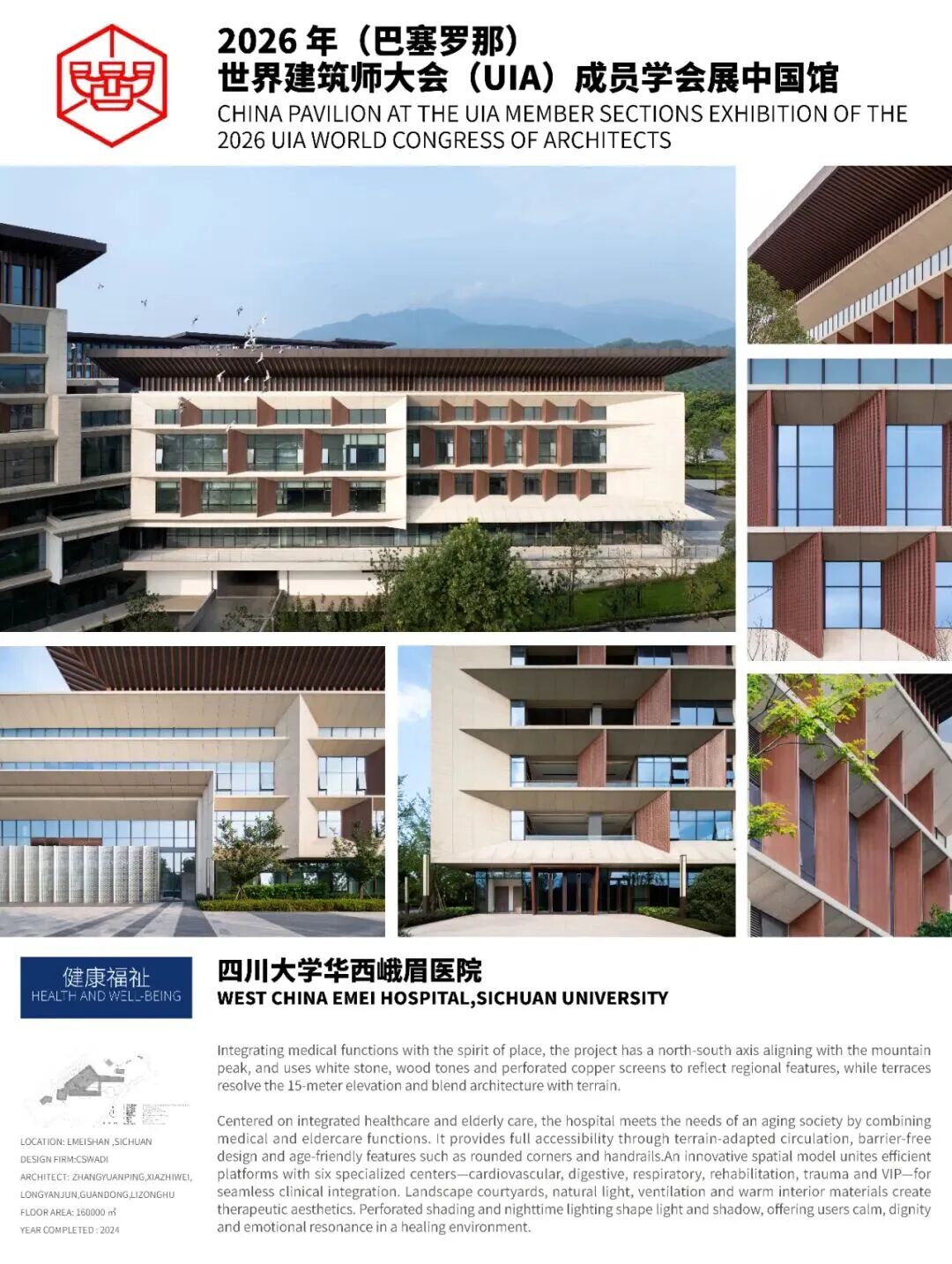
West China Emei Hospital, Sichuan University
The category of health and well-being focuses on how architecture supports quality of life, recovery and care, and everyday health. Covering medical, elder-care, wellness, and community health spaces, the projects use clear circulation paths, natural light, accessible design, and shared spaces to create warmer, more comfortable and dignified care environments.
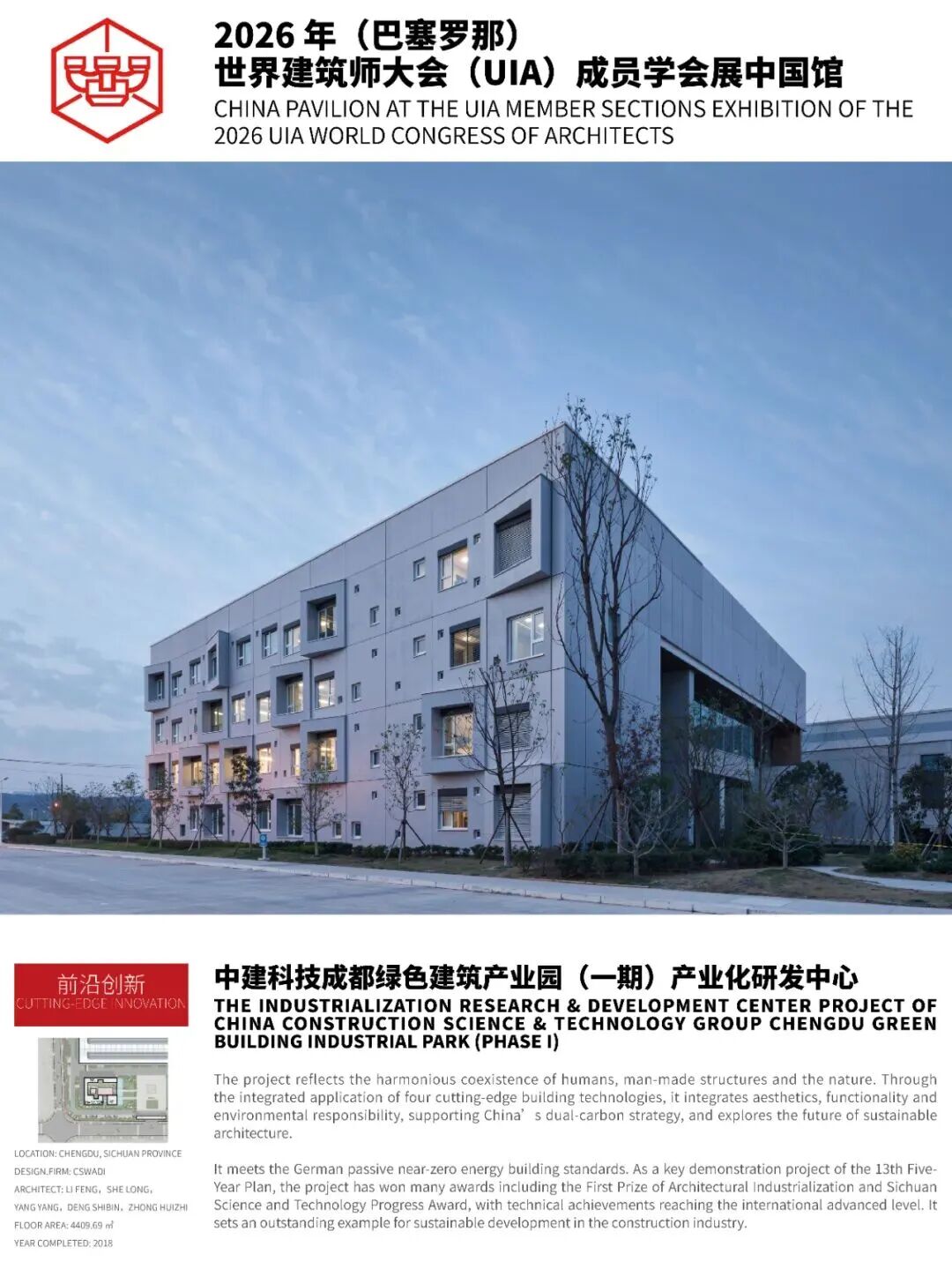
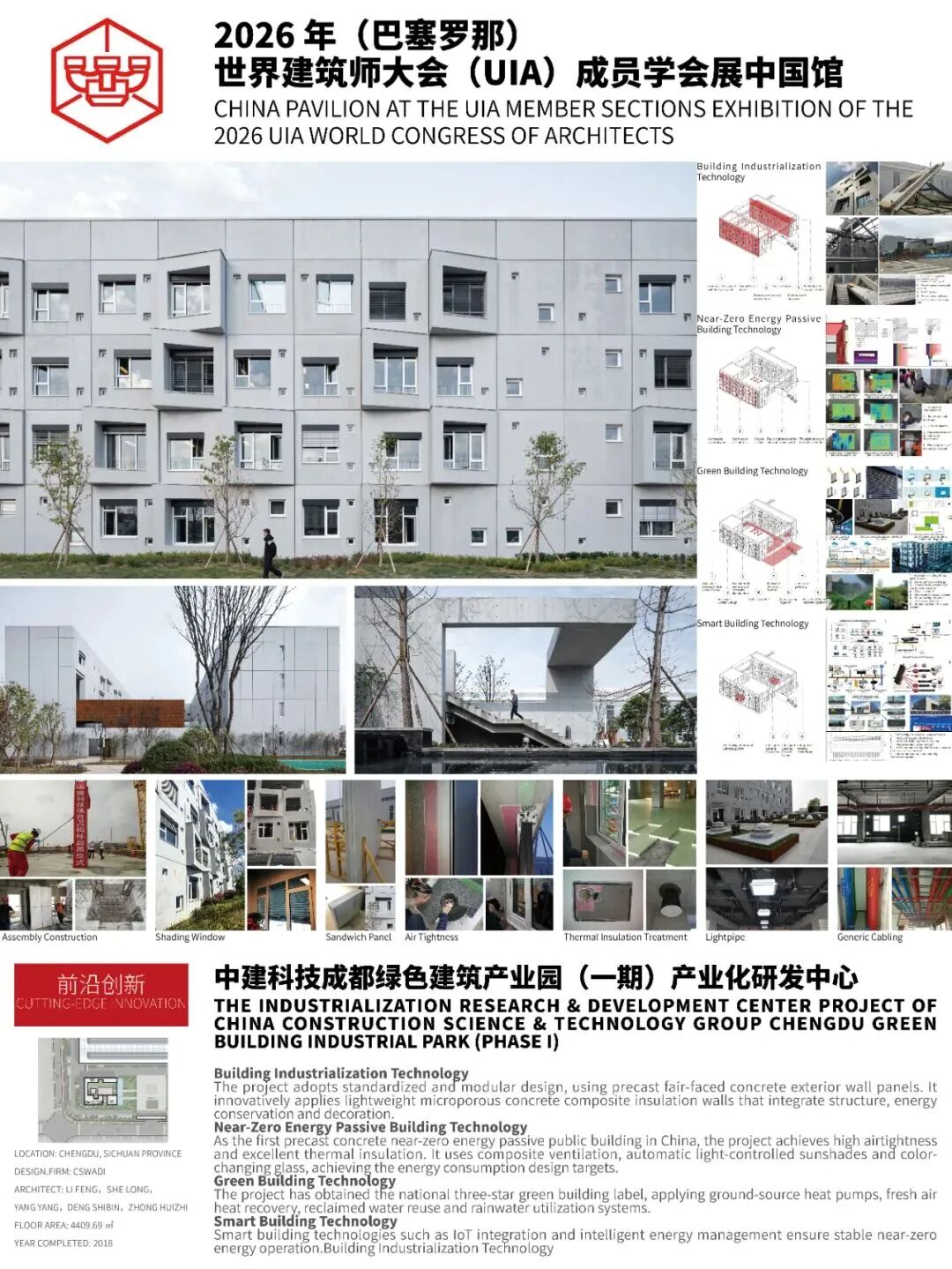
The Industrialization Research & Development Center Project of China Construction Science & Technology Group Chengdu Green Building Industrial Park (Phase I)
The category of cutting-edge innovation centers on how new technologies, materials, structures, and ideas are pushing the boundaries of architecture. The projects touch on digital design, smart construction, near-zero-energy consumption, prefabrication technologies, and extreme-environment architecture, reflecting the industry's active response to climate change, resource transition, and the digital era.


Site Map | Legal Statement | FAQ | Contact Us
©2017-2020 CSCEC ICP 05049820 CSCEC . LTD ICP 08010180



